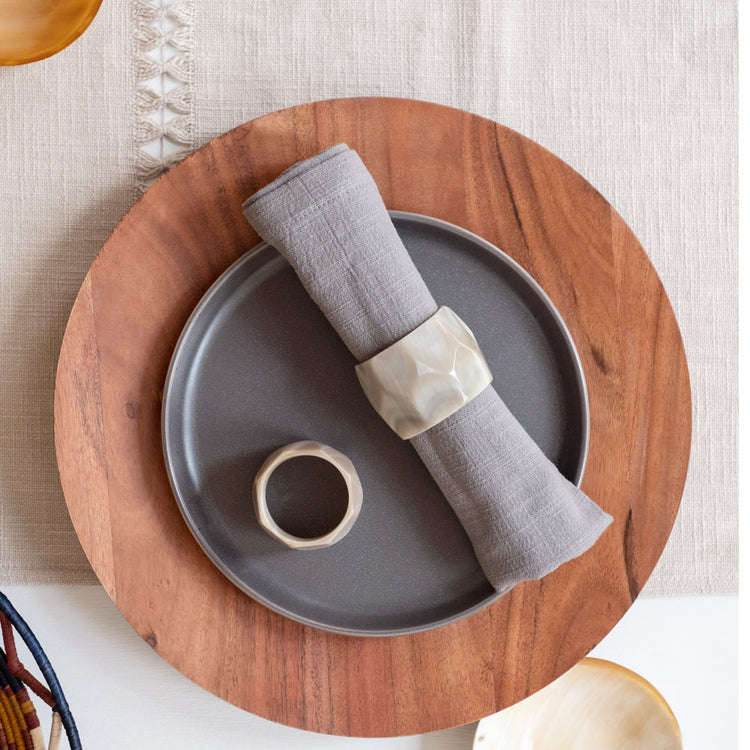
Shaped from the horn of the Ankole-Watusi — a breed of cattle native to western Uganda and East Africa — these napkin rings are a genuine byproduct of the food system, repurposed with care into something worth keeping. The faceted surface catches light differently from every angle, and the natural tonal variation means no two rings read exactly alike. Warm cream, amber, and deep brown move through each piece in their own way.
Because every ring is shaped by hand from natural horn, variation in tone and faceting is part of the character — not a flaw.
Shipping calculated at checkout.
30-day returns on unused pieces.
The Story
Shaped from the horn of the Ankole-Watusi — a breed of cattle native to western Uganda and East Africa — these napkin rings are a genuine byproduct of the food system, repurposed with care into something worth keeping. The faceted surface catches light differently from every angle, and the natural tonal variation means no two rings read exactly alike. Warm cream, amber, and deep brown move through each piece in their own way.
Because every ring is shaped by hand from natural horn, variation in tone and faceting is part of the character — not a flaw.
Details & Materials
Dimensions
Care
Shipping & Returns
Shipping calculated at checkout.
30-day returns on unused pieces.

The detail that makes a simple table feel considered
The napkins are folded, the plates are set — and then there are these. Each faceted ring catches the candlelight a little differently, and guests reach for them before they reach for anything else.