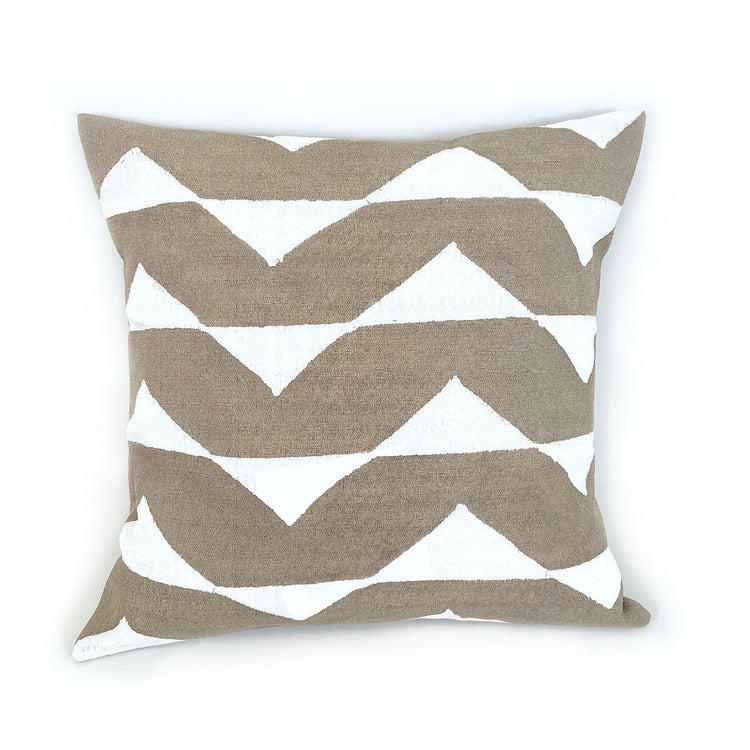
Woven from 100% cotton into a textured bark-weave cloth, each cover is then patterned by hand using a resist-painting method rooted in Zimbabwean tradition — Sadza, a maize paste, is applied directly to the fabric to reserve the undyed areas before color is set. The result is a geometric triangle motif with the fine craquelure lines that only a hand-applied resist process can leave behind, giving each cover a slightly different weight of mark, depth of tone, and character entirely its own.
Because each piece is made by hand in small runs, minor variation in pattern placement and dye saturation is part of what makes it — no two covers read exactly alike.
Shipping calculated at checkout.
30-day returns on unused pieces.
The Story
Woven from 100% cotton into a textured bark-weave cloth, each cover is then patterned by hand using a resist-painting method rooted in Zimbabwean tradition — Sadza, a maize paste, is applied directly to the fabric to reserve the undyed areas before color is set. The result is a geometric triangle motif with the fine craquelure lines that only a hand-applied resist process can leave behind, giving each cover a slightly different weight of mark, depth of tone, and character entirely its own.
Because each piece is made by hand in small runs, minor variation in pattern placement and dye saturation is part of what makes it — no two covers read exactly alike.
Details & Materials
Dimensions
Care
Shipping & Returns
Shipping calculated at checkout.
30-day returns on unused pieces.
A hand-painted pattern that earns its place on the sofa
You reach for it without thinking — the coral one, propped against the arm of the sofa where the afternoon light catches the crackled resist lines. Guests ask where it came from. The honest answer takes a moment to explain.


