
- Material Metal
- Use Indoor
- Style Minimalist
- Care Wipe clean
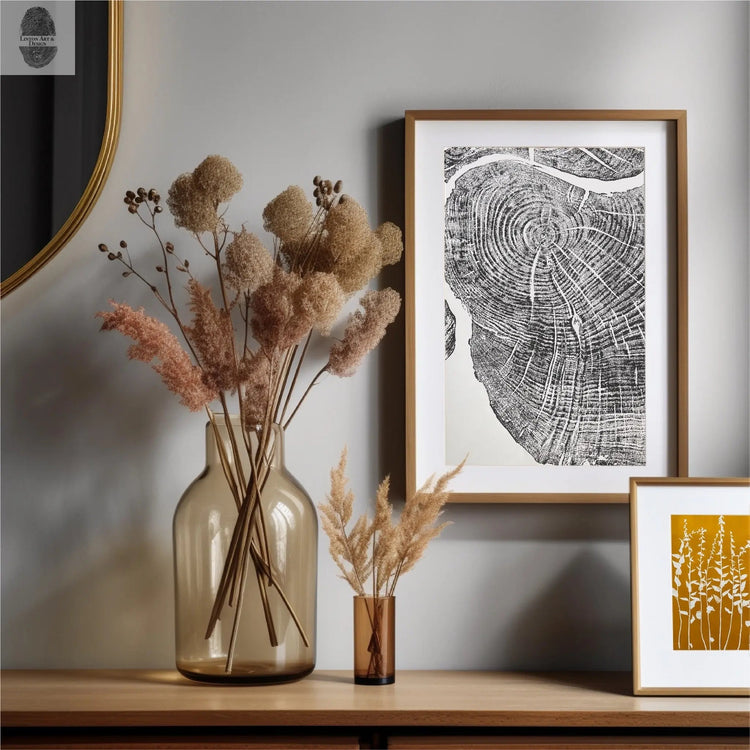
Made by pressing ink onto paper from the cross-section of a fallen Pennsylvania sugar maple, this print is less reproduction than record — the grain, growth rings, and fissures transferred exactly as the tree left them. The cropped composition draws the eye inward through concentric rings, each one a season of slow, dense growth.
Shipping calculated at checkout.
30-day returns on unused pieces.
The Story
Made by pressing ink onto paper from the cross-section of a fallen Pennsylvania sugar maple, this print is less reproduction than record — the grain, growth rings, and fissures transferred exactly as the tree left them. The cropped composition draws the eye inward through concentric rings, each one a season of slow, dense growth.
Details & Materials
Dimensions
Care
Shipping & Returns
Shipping calculated at checkout.
30-day returns on unused pieces.

A single tree, pressed onto your wall
You find yourself tracing the rings with your eyes — inward, then outward again. There is something quieting about a print that began as a tree standing in Pennsylvania, and ended up here, on the wall above your shelf, still legible.


