
Mid-Century Modern
Shape & open bases
The home style guide
Mid-Century Modern, Artisan, Boho & Coastal
Explore four distinct approaches to decorating—and learn what gives each one its character. This visual guide explains their differences through complete room examples, from furniture and materials to colors, rugs and finishing details.
Follow the numbered details to understand what you’re seeing, why each selected product works and how to bring those ideas into your own home. You’ll leave with a clearer sense of the looks you enjoy and a practical starting point for choosing your next piece.
Four complete rooms
Each room carries its approach through the furniture, wall color, rugs, art and curtains. These are examples, not four boxes you must fit into.
Shape & open bases
Surface & individual detail

Layers & varied texture

A soft palette & clear space
At a glance
| Collection | Look for | Room feeling | An easy first move |
|---|---|---|---|
| Mid-Century Modern | Furniture shapes you can read clearly: curved seats, round tops and space beneath the bases. | Warm, structured, open | Choose one shaped wood chair or a low cabinet with an open base. |
| Artisan | Object and surface detail: grooves, visible grain, matte finishes and uneven outlines. | Tactile, detailed, personal | Give a detailed lamp or bowl a useful place with room around it. |
| Boho | Several textures and patterns layered together, connected by repeated colors or wood tones. | Textured, varied, collected | Add one woven or patterned layer and repeat a color already in your room. |
| Coastal | Calm larger surfaces, restrained pattern, open woven details and clear space. | Light, calm, easy | Keep larger surfaces simple and introduce one lighter textile or open weave. |
These are styling suggestions, not rules. Materials, finishes, dimensions and care requirements vary by product.
01 / Read the room
Shape & open bases
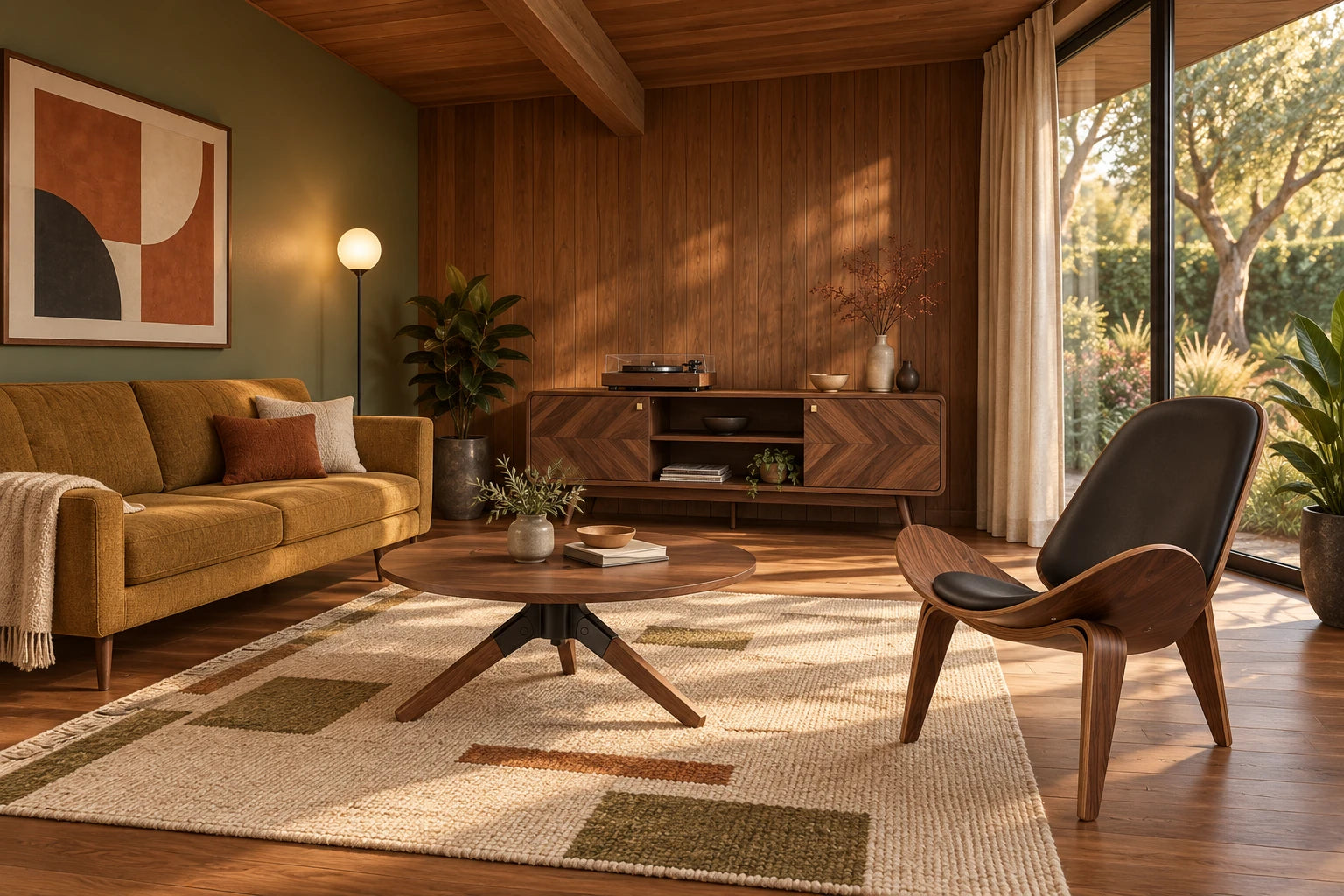
Mid-Century Modern refers to modern design associated with the middle of the twentieth century. Designers explored new materials and ways to make useful furniture, including molded wood with curves that fit the body. In this room, look at the furniture’s outlines: a curved seat, a round tabletop and a long, low cabinet. Space beneath the pieces makes those shapes easy to see. These are contemporary collection products, not authenticated period furniture.
Follow the wooden seat as it rises at each side. The fitted black cushions sit within that shape; they do not hide the wood. The pale lines at the edge reveal the layers of bent plywood. This is what we mean by a sculptural form: its outline is interesting before any pattern or decoration is added.
Look beneath the round top. The wooden legs spread away from a visible black joining bracket, leaving much of the floor in view. The construction contributes to the shape. That open base gives the table a lighter appearance than a closed drum of a similar size.
Look at the space below the cabinet and the legs leaning outward. Tapered means a leg becomes narrower toward its end. Here, the slim supports make the wide cabinet feel less bulky. The curved chair and round table soften its longer, straighter outline; the sofa legs and graphic artwork carry the same attention to shape through the rest of the room.
Start with the furniture’s silhouette. Texture and accessories support the larger forms rather than doing all the work.
Keep a sofa you already like. Add one piece with a clear outline, such as a shaped wood chair or a low cabinet raised on legs. Then compare its scale with the furniture staying in your room. The aim is a useful relationship between pieces, not a matching retro set.


02 / Read the room
Surface & individual detail
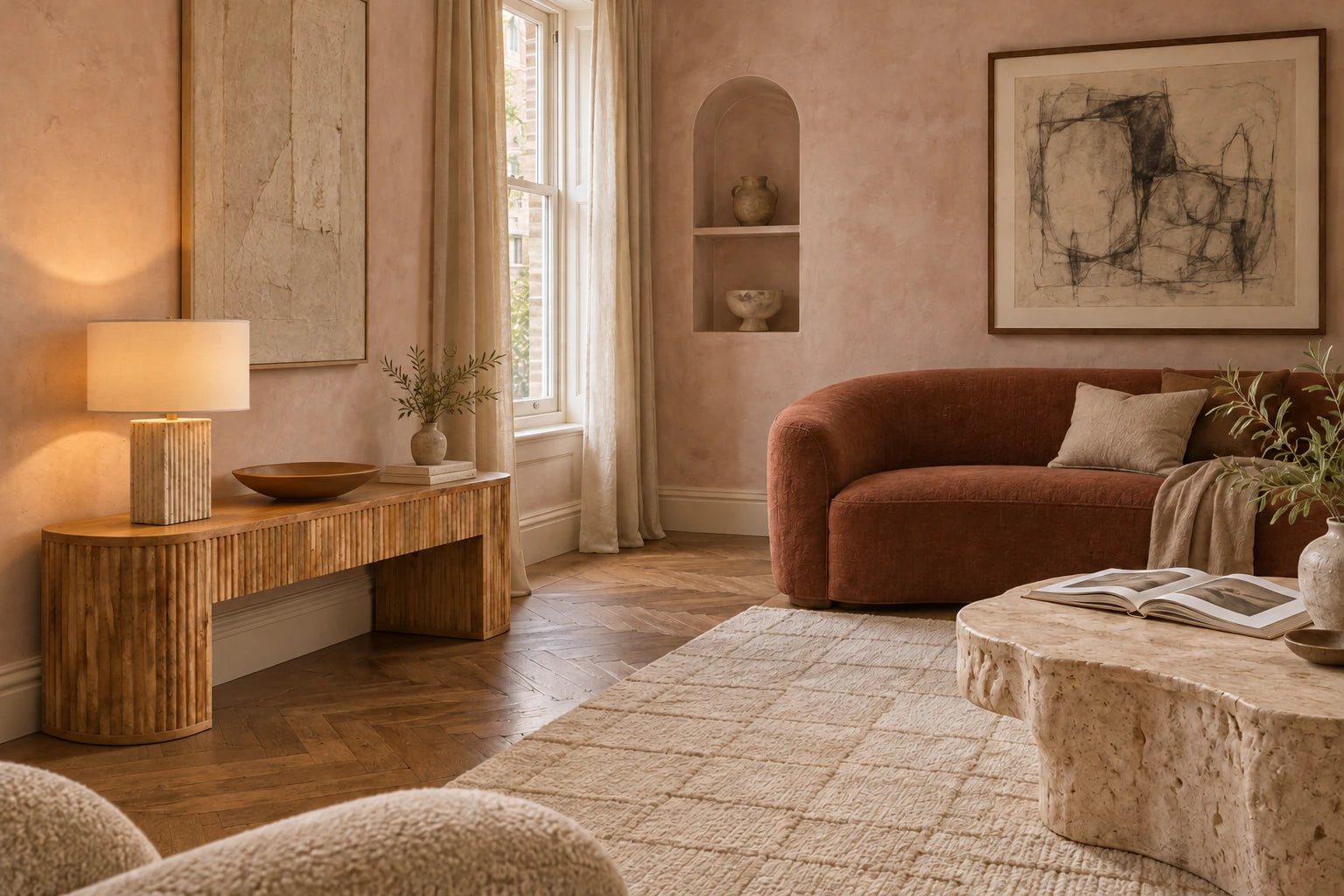
Roost & Roam’s Artisan collection focuses on texture, finish and the shape of individual objects. This preference can work within several room styles. In this scene, the interest comes from details you want to look at more closely: ridged wood, a pale grooved lamp base and the uneven outline of a ceramic bowl. The furniture arrangement stays simple so those details have room to be noticed.
The repeated upright grooves are called fluting. Light catches the raised edges while the recesses stay darker, making a broad front more interesting without adding a printed pattern. Notice how the detail continues around the console’s rounded outer supports.
The lamp’s pale base also has vertical grooves, while its fabric shade is smooth. The repeated direction connects it to the console. The change in color and surface stops the pairing from looking like an identical set.
The bowl rises more at one end and extends lower at the other. That asymmetry means its two sides do not mirror each other. The matte finish and open space around it let its shape remain visible.
Start with the surface or individual object. You may like the broad shapes of a Mid-Century room and still choose an Artisan lamp or bowl for its detail.
Choose one surface detail you genuinely enjoy, then give it a useful place. A lamp can bring texture beside your existing sofa; a bowl can hold a few everyday objects. Repeat a detail sparingly. You do not need to fill every surface or assume that every product in the collection is handmade.


03 / Read the room
Layers & varied texture
Boho brings interest through layers that do not all match: different weaves, patterns and personal objects sharing a room. Here, a cord-sided chair, fine woven cabinet panels and a chunky striped pouf each contribute a different texture. The room feels collected because those layers vary, while the wood tones and cream upholstery give them a common thread.
Closely spaced cords fill the open sides of the chair. You can still see between them. The smooth wooden frame and plain cushions make that texture readable instead of competing with it.
The woven panels sit inside arch-shaped door frames. Their smaller, tighter pattern differs from the chair’s vertical cords. This is layering: several textures doing different jobs in the same room.
The cream loops and blue-taupe stripes bring another scale of texture down to seat level. A patterned rug and varied sofa textiles support it. The layers share warm neutrals, while their surfaces are allowed to differ.
Compared with this Coastal scene, the Boho example gives pattern and variation more space. Woven material alone does not make a room Boho; look at how it combines with the other layers.
Begin with the room you have. If its large pieces are fairly plain, add one texture you would enjoy using—a woven chair, a patterned textile or a pouf—then look at the whole room before adding another. Repeat a color or wood tone so variation has something connecting it.


04 / Read the room
A soft palette & clear space
Coastal can work in a city apartment as well as a lakeside cottage. This room pairs ivory upholstery and a soft-toned rug with pale wood, soft blue curtains and a landscape painting. Woven surfaces bring interest, while the number of strong patterns and objects stays restrained. The wall color, textiles, artwork and clear space all contribute to the calm feeling.
The chair’s warm wood frame and rope sides add definition around plain off-white cushions. The surfaces remain easy to read because strong pattern is limited. This particular chair is sold for outdoor use; the scene styles it indoors.
The small openings in the cane panels allow you to see through parts of the table’s cylindrical body. That openness is the relevant detail—not simply the word rattan. The round wood top gives the lamp a useful surface.
Tightly coiled strands wrap the lamp’s jug-shaped base. The plain fabric shade and nearby ivory upholstery make that texture easy to notice. The striped blue cushion connects with the curtains and painted wall, repeating a little color without adding a beach theme.
Compared with the Boho example, this room uses fewer contrasting patterns and leaves more clear space. The calm comes from the whole arrangement, not from adding a shell or buying something with a coastal label.
Keep the larger surfaces you want to live with, then look for one lighter textile or an open woven detail. Leave some surfaces and floor space clear. You can borrow a Coastal feeling without replacing every piece or introducing a beach theme.
Collected, not coordinated
Choose a style for the larger shapes, then borrow details from another. A repeated wood tone, color or texture gives the room a common thread.
Pair a clean-lined wood anchor with a ceramic lamp, bowl or vase. The furniture brings structure; the surface detail adds warmth.
Keep the larger surfaces light, then layer woven texture and soft textiles. Repeat a few warm neutrals so the room still feels open.
Let one sculptural object lead, then surround it with simpler wood and textile layers. Give the more detailed pieces space to be seen.
A room, one choice at a time
Leave with one style direction, one detail to repeat and one useful piece to add. These five steps help you make that choice around the furniture and finishes you want to keep.
Look at the wood tones, upholstery, flooring and fixed finishes already in the room. Choose a direction that works with those pieces.
Start with the most useful addition: a table, chair, bed, rug or lamp. Measure its footprint and the space needed around it.
Carry a color, finish or texture into two or three smaller choices. The repetition connects the room without making everything match.
A room full of hard surfaces may need textile softness. A room with many textured pieces may need a simpler shape or a clearer surface.
Read dimensions, materials, care instructions, lighting specifications and intended indoor or outdoor use on the product page before ordering.
The details
In these examples, Mid-Century Modern gives the furniture’s outlines and open bases more emphasis. Boho adds more varied weaves, patterns and textiles. A shared wood tone or color can connect pieces from both.
The Artisan collection focuses on material character, surface detail and interesting finishes across ceramic, wood, metal, glass and textile pieces. Read each product description for its actual construction; not every item in the collection is handmade.
Both can use woven texture, wood and soft textiles. Boho usually invites more layering and variation; Coastal tends toward a lighter palette and a more open feeling. Roost & Roam offers separate collections for each, and you can mix pieces from both.
Yes. Start with one direction for the larger furniture, then borrow texture, lighting or smaller objects from another. Repeat a wood tone, color or material to help the pieces sit comfortably together.
Style collections are overlapping ways to browse. A clean-lined wood nightstand or a woven pendant can fit several room directions depending on the surrounding furniture, colors and textures.
No. Work with the pieces you want to keep. A lamp, rug, textile layer or useful accent piece can introduce a different shape or texture while connecting to the room’s existing finishes.
No. The collection includes indoor pieces and selected outdoor furniture. Check the individual product’s intended use, materials and care instructions; a coastal look does not establish weather resistance.
A shared detail is usually more useful than a matching set. Repeat a few colors, finishes or textures, then allow the shapes and smaller objects to vary. Keep dimensions, comfort and everyday use in the decision.
Find the pieces
Use the style direction and details you have chosen to browse each collection. The room photos offer inspiration; the links open the current assortment. Check dimensions, materials and care on each product page before ordering.


